

When Independence Becomes Unaffordable: A Gen Z Reality
Rising costs, stagnant wages, and a broken system have turned independence into a privilege for Gen Z. (2 min read)
Written by: Natalie Feit
Housing Frederick Intern, Hood College graduate & Master’s degree candidate in Social Work

For many members of Gen Z (1997-2012) (Colby & Ortman, 2014), the goal of moving out and living on our own feels less like a rite of passage and more like a luxury. We were raised hearing stories of how our parents moved out at the young ages of 18 and 20, getting apartments with roommates, or even buying their first house. Now that reality feels far out of reach — especially when the numbers say so.
The truth is, Gen Z isn’t irresponsible or lazy like people think. Living independently is unaffordable because the economic conditions have completely shifted. Rent prices have skyrocketed, minimum wage has been stagnant, and the cost of basic necessities continues to rise (Bloomenthal). In 2020, nearly half of adults ages 18 to 29 were living with one or both of their parents, which is the highest rate since the Great Depression (Fry). And it’s not because we’re not working. Many of us are juggling multiple jobs, side hustles, and school, yet still can’t make ends meet.
What some people fail to understand, is that the world we are inheriting is completely different than it used to be. College is more expensive, debt is heavier, and the job market is more competitive than ever. Entry-level jobs often require years of experience and offer wages that barely cover rent, let alone groceries, utilities, insurance and transportation. The idea of affording a down payment on a house feels like a fantasy.
Even those of us who manage to move out often do so by sacrificing comfort, stability, and peace of mind — living paycheck to paycheck, splitting rent with multiple roommates, or staying in unsafe housing situations just to scrape by. We’re doing our best, but the system isn’t working in our favor.
So no, we’re not lazy. We’re not entitled. We’re just navigating an economy that wasn’t built for us. And instead of shaming young adults for living at home, maybe it’s time we start addressing the deeper issue: the cost of independence is no longer affordable — and that’s not our fault.
References
Bloomenthal, A. (2025, February 5). Can a family survive on the U.S. Minimum Wage?. Investopedia. https://www.investopedia.com/articles/personal-finance/022615/can-family-survive-us-minimum-wage.asp#toc-pay-isnt-the-only-problem
Colby, S. L., & Ortman, J. M. (2014, May). The Baby Boom Cohort in the United States: 2012 to 2060. U.S; U.S Census Bureau.
Fry, R. (2020, September 4). A majority of young adults in the U.S. live with their parents for the first time since the Great Depression. Pew Research Center. https://www.pewresearch.org/short-reads/2020/09/04/a-majority-of-young-adults-in-the-u-s-live-with-their-parents-for-the-first-time-since-the-great-depression/?utm_source=chatgpt.com
Goodman, L., Choi, J. H., & Zhu, J. (2023, April 14). The “real” homeownership gap between today’s young adults and past generations is much larger than you think. Urban Institute. https://www.urban.org/urban-wire/real-homeownership-gap-between-todays-young-adults-and-past-generations-much-larger-you
Essential, Furloughed, Fearful for the Future
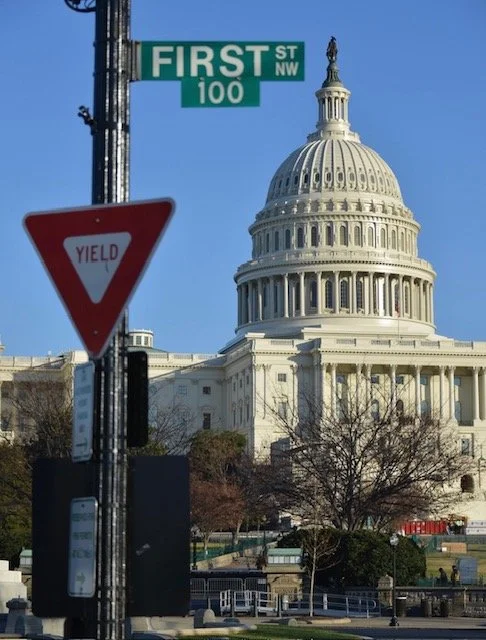
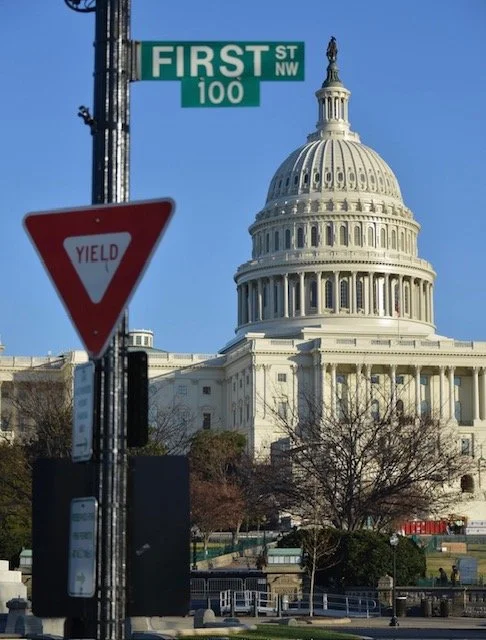
When the government shuts down, federal workers don’t stop showing up—their paychecks do. For hundreds of thousands of Americans living paycheck to paycheck, being labeled “essential” while working without pay isn’t just a political issue, it’s a housing, survival, and mental-health crisis unfolding in real time. (5 min read)
Written by: Chloe Scott
“You’re not only doing your job — you’re doing your job for free, until you’re told otherwise.”
Over 700,000 federal workers have been furloughed and many more are working without pay as the government remains in funding limbo. Driving to work each morning, acting like everything’s normal when, in truth, the paycheck may never arrive. This is the reality for thousands of Americans right now.
Whether you’re Republican or Democrat, urban or rural, the stakes are the same — until Congress comes together and funds the work of government, the people show up, the work gets done, and the pay doesn’t.
I’m not the daughter of wealthy parents. I’m not a public servant with a high salary. I’m a storyteller, a servant-leader, a woman living on her own—paying overpriced rent, prepping meals to save, showing up each day as though everything’s fine. I stand with the more than 700,000 workers who may be missing a paycheck for the first time in their lives.
Inflation is climbing. Bills are due. And fear creeps in. You can’t complete the normal stress cycle when you’re wondering if you’ll get paid. You’re worried. You’re not only doing your job, you’re doing your job for free, until you’re told otherwise.
There’s no grief here—not quite. This is a survival story.
Survival Mode
You focus on how to prepare. You stand in line at the food distribution when you aren’t working for free and on call. You stretch every grocery dollar at budget stores like Aldi. You prioritize rent above everything else because you refuse to risk an eviction notice for the first time.
The consequences of falling behind on rent are severe: eviction increases the likelihood of job loss, health challenges, and further housing instability, according to research from the U.S. Department of Housing and Urban Development. And during a federal shutdown, even participants in housing-assistance programs must still pay their share of rent. For furloughed workers living alone or supporting families, that can mean choosing between groceries and shelter.
Financial precarity for federal employees or anyone living paycheck to paycheck isn’t just a work issue, it’s a housing issue.
According to the National Low Income Housing Coalition, 1 of 5 of renters nationwide have been behind on payments at some point since the pandemic, with low-income households hit hardest.
If there is no money flowing in, what’s the second-best option? So, you start seeking a second job.
You start applying for part-time jobs within twenty minutes of home with hopes that someone will give you a chance, but you’re overqualified, because you have what was supposed to be a “good government job.”
You battle anxiety just from the rigor of your schedule but now the paycheck is gone. If you’re working without pay, can you still show up to the food bank? Will remote work be an option? How are you supposed to keep your head above water when your life depends on a vote that hasn’t happened yet?
And then you do something harder: you stand still. You stare your fears in the face each day and build faith that there will be a way out. You take out a small loan from a federal credit union. You lean into your network—support calls, tap-ins—because sometimes survival depends not on what you know but who you know. You start re-imagining what success looks like after the storm. Yes, over 18% of the labor force is in DC but what industries are beyond? What industries will carry you forward? What transferable skills can help you create stability again?
How Housing Councils and Partners Can Help
At moments like these, the role of housing organizations becomes crucial. Councils, agencies, and community partners can:
Connect furloughed or unpaid workers with short-term rental-assistance programs or flexible payment plans.
Educate renters on what happens if they fall behind—late fees, credit impacts, eviction filings—and link them to housing counselors or legal aid.
Promote financial-wellness tools through trusted partners like federal credit unions or local nonprofits.
Advocate for stronger safety nets, including emergency funds and renter protections for workers caught in political gridlock.
When paychecks stop, rent doesn’t. And that’s where housing advocates, nonprofits, and neighbors must step in to close the gap between policy and people, between waiting and surviving.
Essential, Furloughed, Fearful.
(But still standing)

Affordable Housing After 2020 and Beyond by Shannon Bohrer
The pandemic has exposed some critical problems and issues in our society, many of which we already knew existed, but some were not sufficiently being addressed. (4 min read)

Photo by Blake Wheeler on Unsplash
The pandemic has exposed some critical problems and issues in our society, many of which we already knew existed, but some were not sufficiently being addressed. As the pandemic ends, and we hope it does, the problems exposed are predicted to be greater than before. If anything, the pandemic put a frame around the problems, exposing how widespread the issues were and how they will grow. Affordable housing is one of those issues, a large one. In our society, those in the lower ends of economic security were harmed the most and will be the last to recover. I say the last to recover, but many will not recover unless some changes occur.
As the pandemic slowed, property values have increased. The primary reason for the growth is insufficient housing to meet market demands. As properties rise in value, the owners and landlords seek higher asking prices and higher rents. While the economic pressure affects everyone, the hardest affected are families at the lower ends of financial incomes.
“Once the pandemic abates, millions of American women could lose their homes.” Reported by Bryce Covert in the New Republic.
Currently, thirty-seven million Americans live in homes, with an economic crisis facing them because they cannot afford the cost of homeownership. When it takes two or more wage earners to pay the bills, and one or two lose their jobs, the bills do not go away; they grow.
The demand for housing is also growing as the various rent moratoriums expire. The number of families looking for housing adds more pressure on the market. When we examine people, who live below the poverty line, one in four renters spends over 70 percent of their income just on housing. Housing for this group is not sustainable without some changes.
When we examine problems like affordable housing, we should understand that the lack of affordable housing is a problem that affects everyone. Schools, public safety, hospitals, social programs, and even transportation issues are all affected. Low-wage earners need to reside, where they have access to transportation for work.
To address the affordable housing problem, we need to examine the problem from multiple perspectives. Families experiencing housing insecurity often have numerous issues related to their housing needs. Multiple agencies exist, both government and private non-profit, with the goal of addressing the problems. When these agencies cooperate and work in unison, problems can be addressed more efficiently. There are many problems that contribute to the lack of affordable housing, and there are no easy answers.
As James Baldwin said, “Not everything that is faced can be changed, but nothing can be changed until it is faced.”
Shannon Bohrer has served as Board Chair of Housing Frederick since 2019. After his career with the Maryland State Police, he taught at the FBI Academy and conducted research with the Behavioral Science Unit. He currently consults with the National Gallery of Art. He and his wife Sue live in Emmitsburg, MD.